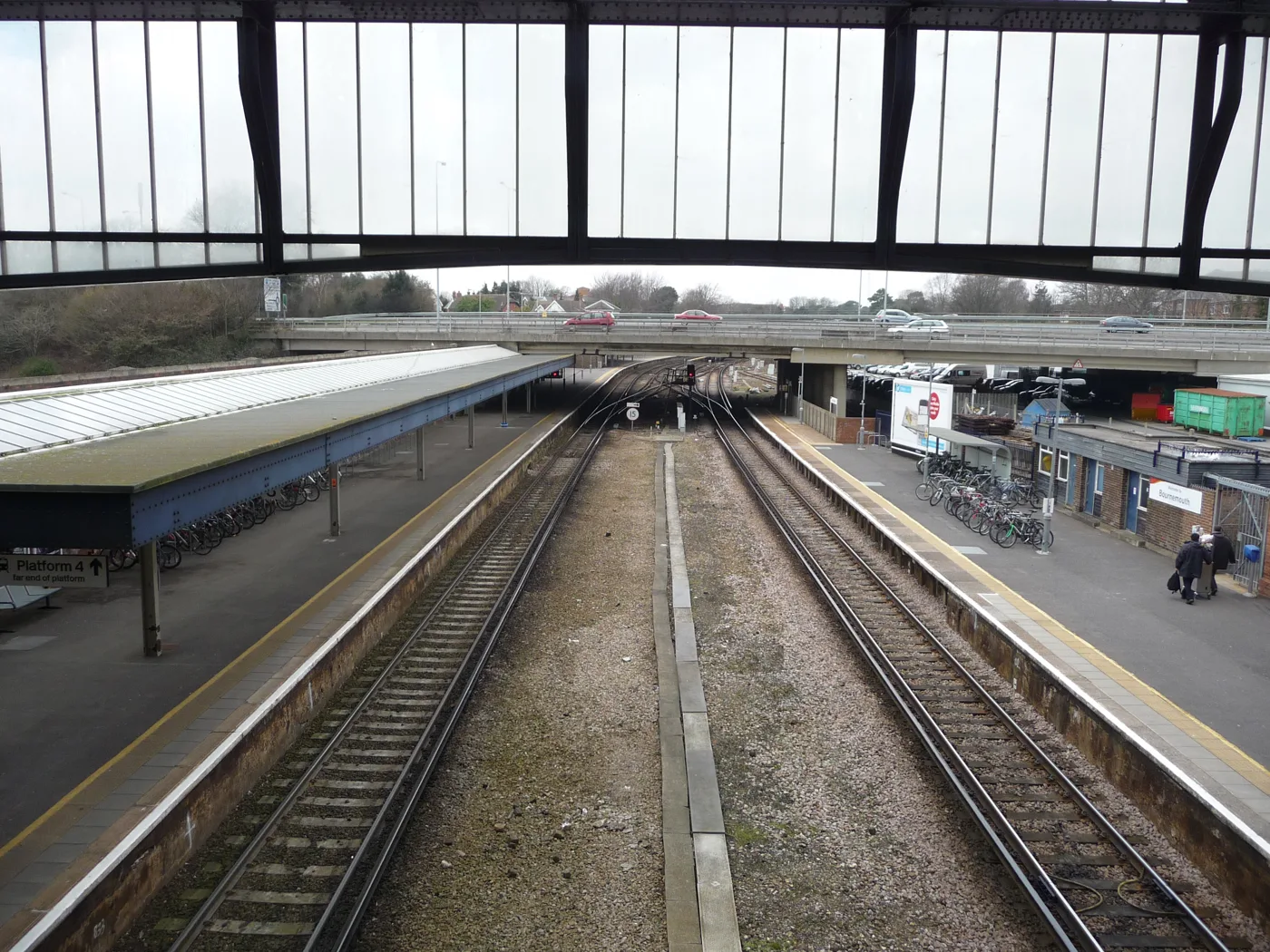

Highways maintenance takes £49.3m of the £112.3m BCP has to 2031. The tram is feasibility work only. Every Bournemouth scheme in the adopted plan, named.
The plan that decides how transport money is spent in Bournemouth for the next 15 years is now in force, and the full documents are published. BCP Council adopted the joint Local Transport Plan with Dorset Council at a full council meeting on 28 July 2026, by 44 votes to 13 with one abstention.
The number that matters to residents is in Annex B of the implementation plan. BCP Council expects £112.3 million for transport over the first five years, 2026/27 to 2030/31. Dorset Council, which has a far larger road network to maintain, expects £203.5 million.
Nearly half of the BCP figure, £49.3 million, is highways maintenance. That is roads and pavements, not new schemes.
What Bournemouth actually gets
Strip out the vision statements and the implementation plan names specific schemes for the BCP area in its first five years. The ones inside Bournemouth itself are:
- a bus priority scheme between Bournemouth station and the town centre, described as the key one, plus improvements to the Station Roundabout slip road
- a review of on-street parking and bus stop provision on Charminster Road and on Wimborne Road in Winton, to improve traffic flow and accessibility
- upgrades to Boscombe Bus Station and Bournemouth Travel Interchange, with new shelters, accessible boarding kerbs and real time screens that operators can use to post cancellations and diversions
- an upgrade of the traffic signals along the Castle Lane East corridor, the first phase of a larger access package for the A338, Wessex Fields, Aviation Business Park and Bournemouth Airport
- improved transport on a priority corridor from Bournemouth Travel Interchange to the town centre and the seafront
Three more sit in Poole and Christchurch, so they are worth naming as such: a new eastbound bus lane at Branksome Roundabout, a parking and bus stop review on Ashley Road in Parkstone, and a package of walking, cycling and public transport changes in Christchurch town centre. A refurbishment of Poole’s Twin Sails Bridge is listed as a major project in the same five years.
The council also commits to making every railway station in BCP fully accessible from street to seat, working with Network Rail. There are seven stations in the council area and an eighth, Hinton Admiral, just over the Hampshire border.
The money, stream by stream
None of this is BCP’s own money. It is eight separate government funding lines, and the biggest by far is for repairing what already exists.
Read the annex carefully and the totals are softer than they look. Revenue funding for the Local Transport Grant, Active Travel England and electric vehicle infrastructure is only set out for three years, to 2028/29, because the government has not yet held the spending review that covers the rest. The council has assumed 2030/31 will match 2029/30. Its own first year, 2026/27, is £20.2 million, the smallest of the five.
The tram, the metro and the branch line
Three rail and mass transit ideas ran through last week’s coverage of the plan. The documents are precise about how far each has got, and none of the three has money attached.
- Trams or light rail. The plan commits only to “progress feasibility of a high-capacity public transport system, for example, trams, light rail”. It adds that new housing along transport corridors “will improve the business case for a long term mass transit solution”. That is a study, not a scheme.
- The Dorset Metro Shuttle, a turn-up-and-go service between Wareham and Brockenhurst. The councils are preparing a business case with Network Rail and the Western Gateway transport body and looking for funding.
- The Hamworthy branch line, in Poole about five miles west of Bournemouth town centre. The plan supports reopening it for freight alongside the expansion of the Port of Poole. The plan also describes the “possible re-location” of Poole train station as part of regenerating Poole town centre.
On the existing railway, the plan commits to pressing for shorter journey times from BCP stations to London Waterloo and more frequent services, and to working with Network Rail on 5G and wifi coverage and mobile blackspots on the South West main line.
What residents said, and what officers made of it
The consultation ran from 18 August to 20 October 2025 and drew 1,397 responses. Most respondents agreed or strongly agreed with the vision, and the objectives on public transport and road safety drew the strongest support.
The scheme list for the BCP area got a different answer. Officers told Cabinet that most people picked “neither agree nor disagree”, and gave their own explanation for it:
Analysis of the qualitative responses suggested that this was due to a lack of confidence or certainty that schemes were deliverable within the current funding constraints.
A petition from the BCP and Dorset Motorists Group was presented at council and referred to the cross-party working group that shaped the plan. Officers list the changes the consultation produced, and two of them read as a direct response to drivers: more emphasis on highway maintenance and footway quality, and more emphasis on network management to reduce congestion and on its importance “to drivers and freight and logistics”.
Three drop-in events were held, at Bournemouth Travel Interchange on 18 September 2025, Poole’s Scaplen’s Court on 20 September and Christchurch Library on 29 September. Over 60 organisations responded, including Dorset Police, National Highways, the NHS, Morebus and Network Rail.
Three things in the plan that could cost you money
Buried in the delivery commitments are three revenue-raising or enforcement measures, at three different stages.
- A workplace parking levy. The plan says the council will “explore the potential” for one, naming Nottingham as the precedent. Nothing has been proposed.
- A lane rental scheme. Already approved by the Secretary of State on 30 July 2026 and starting in spring 2027. It charges utility firms and the council’s own contractors up to £2,500 a day to dig up the busiest roads at the busiest times. The detail is on our Bournemouth roadworks page.
- Pavement parking enforcement. The plan says the council will “utilise newly granted powers to enforce unauthorised pavement parking to ensure pavements allow safe passage for walking and wheeling”.
The council’s own page has not caught up
The plan has been adopted for six weeks and the full documents are published on Dorset Council’s website. BCP Council’s own Local Transport Plan page, checked today, still tells residents the consultation “has now ended”, that the councils are “reviewing the responses”, and that “a final version of the plan is expected to be published in spring 2026”. The four PDFs it offers are all marked draft.
Anyone looking for the plan on their own council’s website is therefore reading a page that is about a year out of date.
Why the numbers behind it are worse than they sound
The plan sets out the conditions it has to work in, and they are not flattering:
- 66% of BCP residents are unhappy with the level of congestion, against 59% nationally
- 81% of residents live in a household with a car, against a national average of 76%. In Dorset it is 86%, and most cross-boundary trips into BCP are made by car
- 44% of employed residents travel less than 10km to work, against 35% nationally, so a high share of local journeys are short ones
- the population is about 409,000 and expected to reach half a million by the end of the plan in 2041
There is better news on road condition. BCP says 77% of its roads are rated good against an England average of 57%, that Department for Transport figures put it in the top 20% nationally, and that it repaired 6,274 defects in 2025. Active Travel England rated BCP at capability level 3 in 2025, joint highest in England.
What it means for you
If you drive, the practical change in the next five years is maintenance and signals, not new roads. There is no new river crossing, no A338 widening and no relief road in the plan. What there is: £49.3 million of resurfacing and repair, a signals upgrade on Castle Lane East, and a lane rental scheme designed to make utility companies finish faster.
If you use the bus, the named work is at Bournemouth Travel Interchange and Boscombe Bus Station, and the parking and bus stop reviews on Charminster Road and Wimborne Road in Winton. Those reviews are the ones to watch locally, because changing on-street parking on two busy shopping streets is exactly the kind of scheme that gets consulted on and argued over.
If you take the train, expect accessibility work at stations before you see a faster journey to London. The metro and the tram are studies.
And if you want to influence any of it, the moment is not now. The plan commits to consulting separately on each individual scheme as it is developed, including by randomised sample surveys, so the argument about Charminster Road will happen when that scheme is drawn up rather than in the plan.
One more date to watch. The council told Cabinet it had been tasked with submitting an updated delivery plan to the Department for Transport by September 2026, setting out its delivery priorities across the confirmed funding settlement. That is this month, and it is the document that will say which of these schemes comes first.
The risk officers flagged
The report to Cabinet carries a warning that has nothing to do with money. Local government reorganisation could create a strategic authority covering a different geography, and the duty to produce a local transport plan could transfer to it, away from BCP Council. Officers argue that adopting a joint plan now “would provide a robust starting point” if that happens.
In other words, the plan councillors adopted in July may not be administered by the council that adopted it for all of its 15 years.
Frequently asked questions
Has the BCP Local Transport Plan been adopted?
Yes. BCP Council adopted the joint Local Transport Plan 4 for 2026 to 2041 at full council on 28 July 2026, by 44 votes to 13 with one abstention. Dorset Council adopted it in parallel. It replaces the previous plan, which ran from 2011 to 2026.
How much transport funding does BCP Council have?
An estimated £112.3 million over the five years 2026/27 to 2030/31, from eight government grant streams. The largest is £49.3 million of highways maintenance. The first year, 2026/27, is £20.2 million.
Is Bournemouth getting a tram?
Not in this plan. The commitment is to “progress feasibility of a high-capacity public transport system, for example, trams, light rail”. No funding is attached and no route is identified.
Where can I read the plan?
The strategy and the implementation plan are published in full on Dorset Council’s website. BCP Council’s own page still carries the draft versions and says a final plan is expected in spring 2026.
Sources
- Dorset and BCP Councils Local Transport Plan Implementation Plan 2026 to 2031 for the BCP delivery commitments, the named schemes, the Annex B funding figures, the area statistics and the Dorset total in Annex A.
- Dorset and BCP Councils Local Transport Plan 2026 to 2041 Strategy for the adopted strategy document.
- BCP Council Cabinet, Local Transport Plan 4 (LTP4), 22 July 2026 for the recommendation to adopt, the 1,397 consultation responses, the officer explanation of the “neither agree nor disagree” answers, the Motorists Group petition, the drop-in events, the changes made after consultation, the September 2026 delivery plan deadline and the strategic authority risk.
- BCP Council, Council meeting of 28 July 2026 for the resolution adopting the plan and the voting figures of 44 for, 13 against and one abstention.
- BCP Council, Local Transport Plan for the page still describing the plan as a draft expected in spring 2026, checked 14 September 2026.
- Dorset Council, Local Transport Plan 2026 to 2041 for the consultation dates and the statement that the previous plan has now been replaced.
- BCP Council, green light for new powers to significantly cut roadwork disruption across BCP, 30 July 2026 for the lane rental approval and the £2,500 daily charge.
Checked on 14 September 2026. Figures are the councils’ own estimates and the plan states that delivery depends on funding, consultation and approvals. What is closed on the roads this week is on our roadworks and travel page; what is being built is on Bournemouth planning news.
Have your say