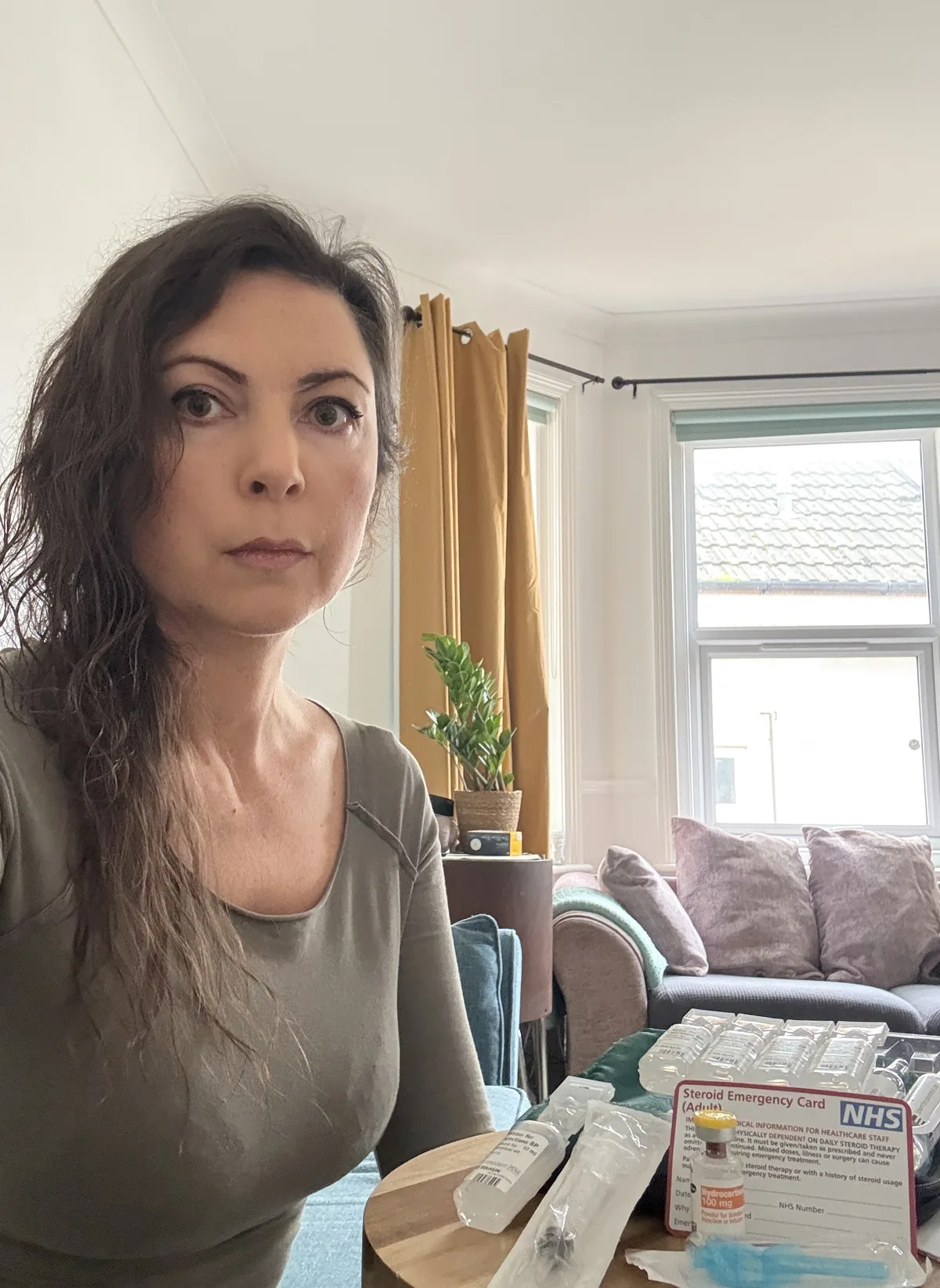

Jaya Da Costa, 44, passed out preparing her emergency injection. She is backing a charity drop-in for MPs on 25 November that asks for a simpler jab.
A Bournemouth woman who lost consciousness while preparing her own emergency injection is asking residents to write to their MPs before a Westminster event on Wednesday 25 November.
Jaya Da Costa, 44, has adrenal insufficiency. Her body cannot make enough cortisol, so a serious illness or injury can tip her into an adrenal crisis. The treatment is an injection of hydrocortisone, and in the UK patients now have to mix it themselves before they can use it.
Overview
- Who: Jaya Da Costa, 44, from Bournemouth, who has had three adrenal crises since surgery in February.
- What she wants: a simpler emergency injection, such as a pre-filled syringe or an auto-injector, and more consistent hospital care.
- The event: a drop-in for MPs in Parliament on Wednesday 25 November 2026, run by the Addison’s Disease Self-Help Group (ADSHG) and sponsored by Dave Robertson MP.
- How to help: the ADSHG has template letters for inviting your MP on its campaign page.
What happened to her
Ms Da Costa developed adrenal insufficiency after surgery in February to remove tumours, according to the account she sent us. She has had three adrenal crises since.
During one on 8 October, she lost consciousness while drawing up her injection. She had injected only part of the dose, but it was enough to bring her round to finish it and call for help.
“I started to lose consciousness and couldn’t draw up the rest quickly enough, so I decided to just inject what I had in the syringe,” she said. “I’m in no doubt that had I been seconds slower, I wouldn’t be here to share this.”
She also describes being told by NHS 111, during a later crisis, that she had taken too much hydrocortisone and should not use her emergency injection. “That advice was wrong, and could have been fatal,” she said. In hospital after her surgery, she says, her emergency injection had been locked away when she felt a crisis coming on. These are her own accounts. She has not named the hospital, and neither do we.
Why the injection got harder this year
Until this year, some UK patients carried liquid hydrocortisone, known as hydrocortisone sodium phosphate. The ADSHG says it was discontinued in May 2026.
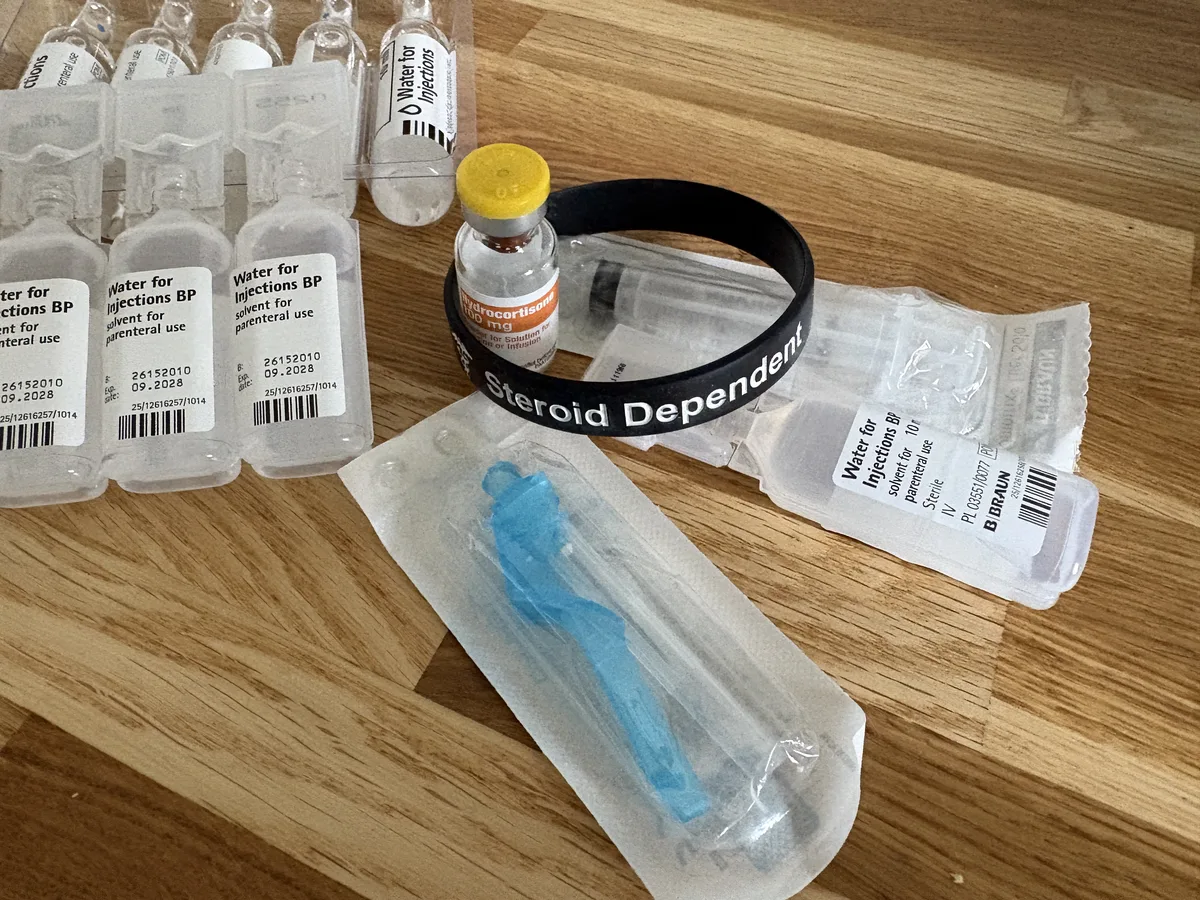
That leaves hydrocortisone sodium succinate, a powder. It has to be mixed with sterile water before it can be injected. Ms Da Costa says the process can take up to 15 steps, often when the patient is already very unwell.
The ADSHG says a quicker product, a dual-chamber vial called ACT-O-VIAL, is licensed in the EU but not in the UK. The water and powder sit in two chambers and mix at the press of a button.
After her crises, Ms Da Costa says it took more than a week to get replacement water-for-injection ampoules, one of the four parts of her kit.
The campaign
The charity’s Safer Adrenal Crisis Care campaign began in April, after the liquid hydrocortisone was withdrawn. It says:
- more than 150 members and supporters have written to their MPs
- more than 75 MPs, ministers and senior health officials have received its briefing
- more than 400 MPs have been invited to the drop-in on 25 November
The charity wants faster, simpler emergency treatment and the same standard of care in every A&E. It calls the current variation “a postcode lottery”.
“We are asking for public support to prevent future deaths,” Ms Da Costa said. “Please ask your MP to back the ADSHG campaign.”
What it means for you
If you or someone you live with carries an emergency hydrocortisone kit, the ADSHG publishes step-by-step guidance on the injection and what to do in an adrenal crisis.
To invite your MP, find them by postcode on TheyWorkForYou and use the charity’s template letter. The ADSHG asks writers to include their postcode, because MPs reply only to their own constituents.
Have your say