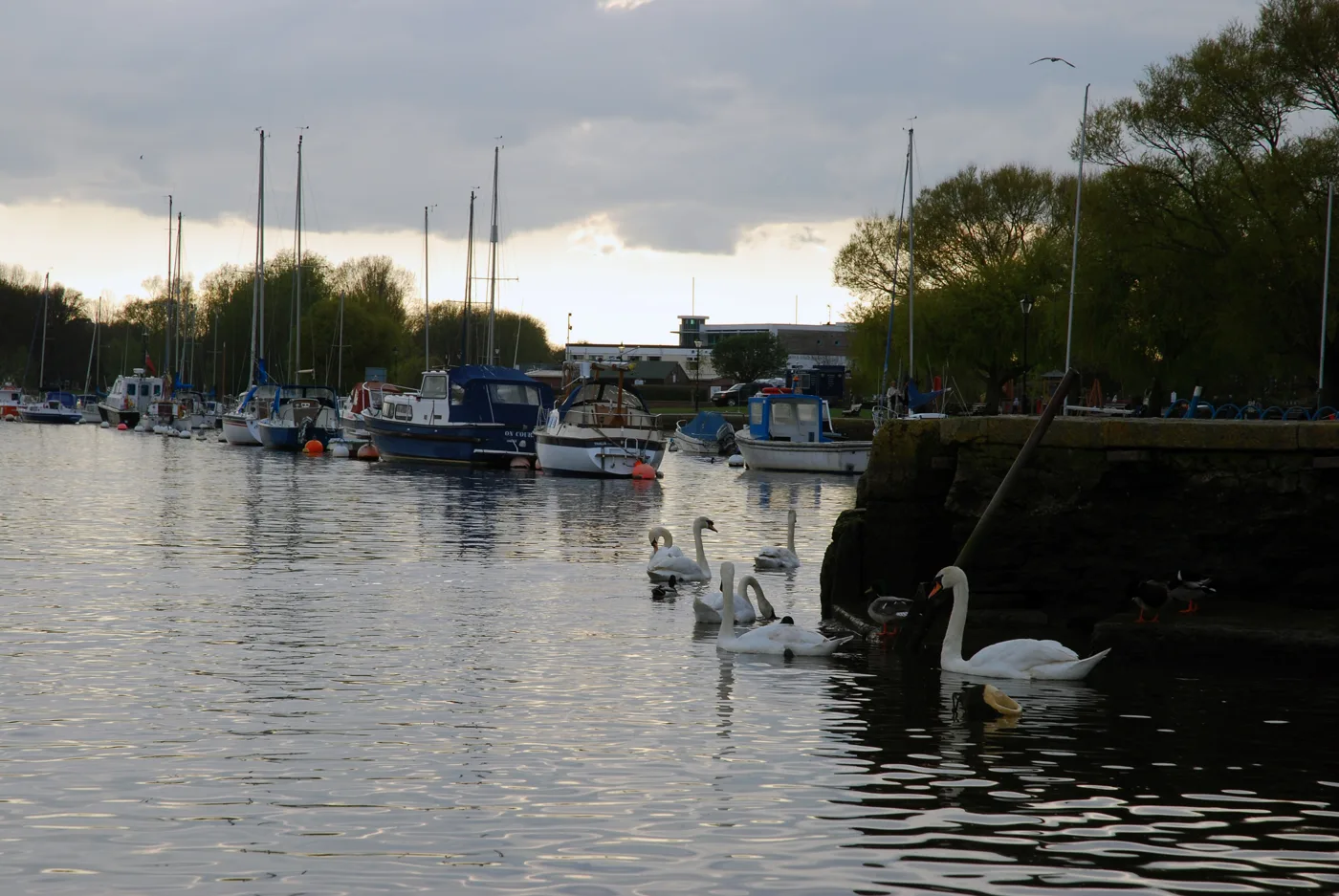

Anyone can apply to designate Christchurch Harbour a bathing water. Defra's deadline is 15 October, and the season the evidence comes from ends 30 September.
BCP Council has committed to backing a bid to make Christchurch Harbour a designated bathing water. If that bid is to be made this year, it has five weeks.
Updated 1 October: BCP Council’s Cabinet agreed on 30 September to write to Defra in support of the community’s designation bid, for activities beyond swimming. It also committed £28,000 for a Christchurch Harbour protection framework, to be written by the Dorset Coast Forum. The money comes from the sale of council land at Cabot Lane, Poole, to Wessex Water. A water environment policy naming the harbour will go into the Local Plan, which goes out to consultation later this year. Defra’s 15 October deadline still stands.
Defra’s own guidance sets the deadline plainly. Applications for designation must reach the department by 15 October 2026, and a successful one takes effect for either the 2027 or the 2028 season. The evidence the application rests on has to be gathered during the bathing season, and the bathing season ends on 30 September.
The commitment came out of the “Action for Christchurch Harbour and Waterways” meeting at the Regent Centre, which the council says drew more than 500 residents. In its own account of the evening, published on 3 September, the council said it would produce a Christchurch Harbour protection policy and would “actively support” designating the harbour as a bathing area, which would require the Environment Agency to monitor water quality there from May to September every year.
Christchurch is roughly five miles east of Bournemouth town centre, and the harbour takes the outflow of both the Stour and the Avon before it reaches the sea at Mudeford.
Why this matters more than another round of testing
The harbour is the gap in the official map. Nineteen bathing waters in Bournemouth, Christchurch and Poole are designated, and the Environment Agency samples every one of them through the season. Christchurch Harbour is not among them. Neither is the Stour, the Avon or the Mude.
That is why two sets of readings have been circulating this summer that appear to contradict each other, and do not.
The Christchurch Harbour and Marine Society has been testing the Stour and the Avon for four years. On 23 August it reported E. coli in the Stour “above 100,000 cfu’s per 100ml of water”, and over 100,000 in the Mude the day before, and told people to avoid entering both waterways. The society’s own threshold guidance is that “500 units and over indicates unsafe levels and over 1,000 one should not be swimming”.
The Environment Agency’s register says something different, because it is looking somewhere else. Every one of the 19 designated bathing waters in BCP was classified Excellent for the 2025 season, the most recent classification published. The latest in-season samples on the register, taken between 17 and 26 August 2026, are all well inside the limits:
- 15 of the 19 returned fewer than 10 E. coli colony-forming units per 100ml
- the highest reading anywhere in the three towns was 100 cfu/100ml, at Poole Canford Cliffs Chine on 24 August
- Christchurch Avon Beach, the designated water closest to the harbour mouth, was sampled at 1.45pm on 26 August and returned fewer than 10 E. coli and fewer than 10 intestinal enterococci
- the Agency’s short-term pollution risk level at all 19 sites was “normal” when we checked on 10 September
Those samples are taken in the sea, off the beach. The society’s are taken in the rivers. Nobody with a statutory duty is sampling the water in between.
What designation would actually change
Designation is not a rating. It is an obligation. Once a site is designated, the Environment Agency has to monitor its water quality through the bathing season, and it has to investigate sources of pollution and recommend measures to improve them. That is the mechanism the campaign is after: not a verdict on the harbour, but a legal reason for someone to go and find out where the bacteria come from.
It is also not unusual for a harbour. Poole Harbour already has two designated bathing waters, at Lake and at Rockley Sands, and both were classified Excellent for 2025. Christchurch Harbour has none.
How to apply, and what it takes
Defra’s guidance is short and the bar is lower than most people assume.
- Anyone can apply. You do not have to be a council, a landowner or an organisation.
- The deadline is 15 October 2026. Applications go to bathingwater@defra.gov.uk, and the department asks people considering an application to contact its bathing water team early.
- You need user surveys showing the site is used for bathing, carried out on at least two days during the bathing season, at weekends, bank holidays or school holidays when the site is busiest, for up to four hours at the busiest time of day.
- Each survey needs a photograph of the site, taken on the day, submitted with the application.
- Then it leaves your hands. The Environment Agency carries out a triage assessment, and may monitor water quality. Defra then holds a public consultation on every application that meets the requirements.
- Designation would be for the 2027 or the 2028 season, not for this one.
The timing is the pinch point. The bathing season runs from 15 May to 30 September, so any survey that has not been done by the end of this month cannot be done until next May, which would push a designation to 2029 at the earliest.
Who was in the room
The meeting was opened by Cllr Mike Cox, deputy leader of BCP Council and a Christchurch Town ward councillor, and chaired by Cllr Vanessa Ricketts of Commons ward. The council’s chief executive, Aidan Dunn, attended.
The panel brought together most of the bodies with a hand in the harbour:
- Martin Stewart, Christchurch Harbour and Marine Society
- Richard Stride, Mudeford and District Fishermen’s Association
- Cllr Andy Hadley, BCP Council portfolio holder for environment
- Jim Flory, Environment Agency
- Matt Wheeldon, Wessex Water
- James Cossins, Tarrant Rawston Farm
- Zoe Randle, Dorset River Catchment Partnerships
- Nick Squirrell, Natural England
Dunn said afterwards: “We appreciate the public’s strength of feeling regarding Christchurch Harbour, and we want the same thing: a clean, safe harbour that everyone can enjoy.”
The council’s published account does not attribute specific statements to the Environment Agency or Wessex Water representatives, and we have not repeated any that it does not record.
What it means for you
If you swim, paddleboard, row or fish in Christchurch Harbour, the practical position today is unchanged. No public body is testing the water you are in, and the society that is testing the rivers upstream told people in August to stay out of them. Its advice is its own, not a formal health warning.
If you want that to change, the route is open to you personally and it closes on 15 October. The heaviest part of the application is the user survey, and the window for doing one runs out on 30 September. Defra asks anyone thinking about applying to contact its bathing water team first, at bathingwater@defra.gov.uk.
If you only want to know whether the beach you use is safe, the Environment Agency publishes every sample it takes, by site, and its short-term pollution forecasts update daily. All 19 BCP sites were rated Excellent for 2025 and were showing normal risk on 10 September.
We will report the outcome of any application, and the council’s harbour protection policy when it is published. What is being built and where is on our Bournemouth planning news page, and what is open on the seafront is on things to do in Bournemouth.
Frequently asked questions
Is it safe to swim in Christchurch Harbour?
No public body tests the water in the harbour, because it is not a designated bathing water. The Christchurch Harbour and Marine Society, which tests the Stour and the Avon, reported E. coli above 100,000 colony-forming units per 100ml in the Stour on 23 August 2026 and advised people to avoid entering those waterways. That is the society’s own advice, not a formal health warning.
Why do the Environment Agency’s readings look so much lower?
Because they are taken somewhere else. The Agency samples 19 designated bathing waters in Bournemouth, Christchurch and Poole, all of them on the coast. Christchurch Harbour, the Stour, the Avon and the Mude are not designated, so the Agency does not sample them.
How do you apply to designate a bathing water?
Anyone can apply, by email to bathingwater@defra.gov.uk. You need user surveys showing the site is used for bathing, carried out on at least two days during the bathing season at the busiest times, with a photograph of each survey. The deadline for this round is 15 October 2026.
When would Christchurch Harbour actually be monitored?
Not this year. A successful application made by 15 October 2026 takes effect for the 2027 or 2028 season, after an Environment Agency triage assessment and a Defra public consultation.
What was the E. coli reading at Avon Beach?
Fewer than 10 E. coli colony-forming units per 100ml, and fewer than 10 intestinal enterococci, in the sample taken at 1.45pm on 26 August 2026. Avon Beach was classified Excellent for the 2025 season.
Sources
-
BCP Council, “BCP Council Commits to Christchurch Harbour Protection”, 30 September 2026, for the Cabinet decision, the £28,000 framework funding and its source, and the Local Plan policy.
-
BCP Council, protecting Christchurch Harbour takes centre stage at informative public meeting, 3 September 2026 for the attendance figure, the panel, the council’s commitments and the Aidan Dunn quote.
- Defra, Designate a bathing water: guidance on how to apply for the 15 October 2026 deadline, the 2027 or 2028 designation seasons, the 15 May to 30 September bathing season, the user survey and photograph requirements, the triage and consultation stages and the contact address.
- Environment Agency bathing water register and the per-site records for the 19 BCP designated waters, for the 2025 Excellent classifications, the latest published in-season samples between 17 and 26 August 2026, and the short-term pollution risk levels, read 10 September 2026.
- Christchurch Residents’ Association, CHAMS: E-Coli in the Stour and Mude, 23 August 2026 (updated 26 August) for the society’s own readings, thresholds and advice.
- Christchurch Harbour and Marine Society for its four-year testing programme on the Stour and Avon.
- BCP Council, bathing water quality for the 19 sampled beaches and the May to September sampling period.
Published 10 September 2026. Water quality figures move, so check the Environment Agency’s own site before you swim.
Have your say